Keep your touch screen clean

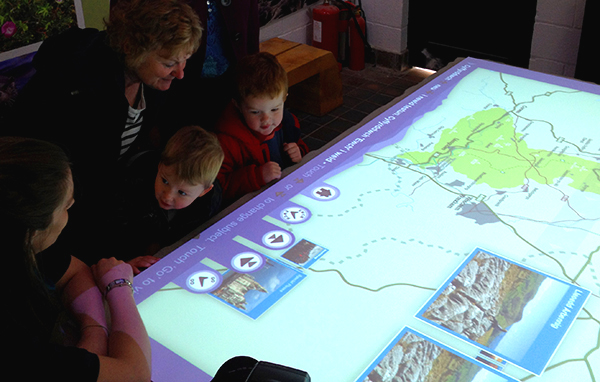
A clean screen on your touch screen exhibit will help ensure your visitors’ experience is a great one and make it easier to maintain and prolong the life of your equipment.

An IR (Infra Red) or SAW (Surface Acoustic Wave) touch screen has its “send” and “receive” sensors at the top, bottom and sides of the screen. These can become blocked if dust and debris build up which in turn might make them less effective or even stop working entirely.

We recommend using an air duster to blow out the dust and debris quickly and easily.  Importantly, it does so without wiping dust into the sides and corners of the screen as is so easy to do when using a cloth.
Wildlife Interpretation: Creating great visitor experiences

We were pleased to attend a recent workshop organised by our friends at AHI, exploring the provision of interpretation at wildlife sites.

It’s an area that Wide Sky Design are regularly involved with as recently opened visitor and welcome centres at Hengistbury Head, Sumburgh Head Lighthouse and Westonbirt Arborteum demonstrate.

We found the session on audience segmentation by Susan Cross (www.telltale.co.uk) very relevant. Her useful insights into the different factors motivating people when they visit sites have prompted some interesting thoughts back at base about how we can respond to these needs through selection of different media/interactive techniques.

If you are interested in how we might mix our process of “hierarchical deconstruction of interpretive objectives” with audience segmentation why not give us a call?

Westonbirt, The National Arboretum

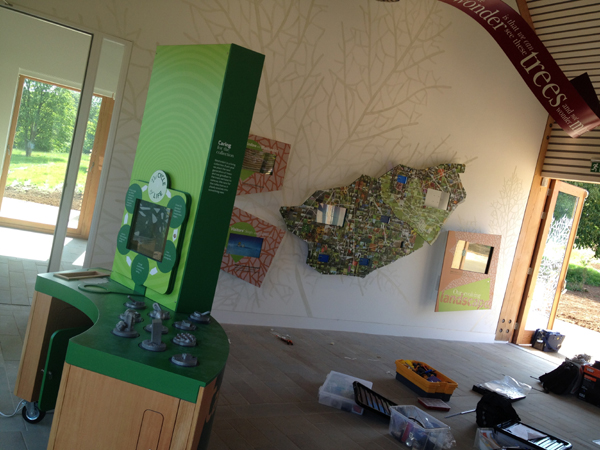
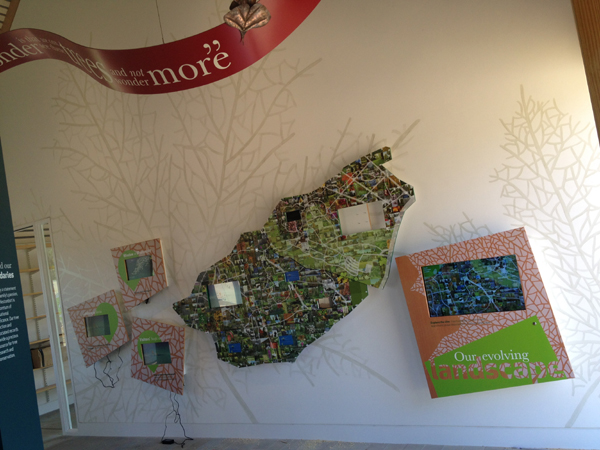
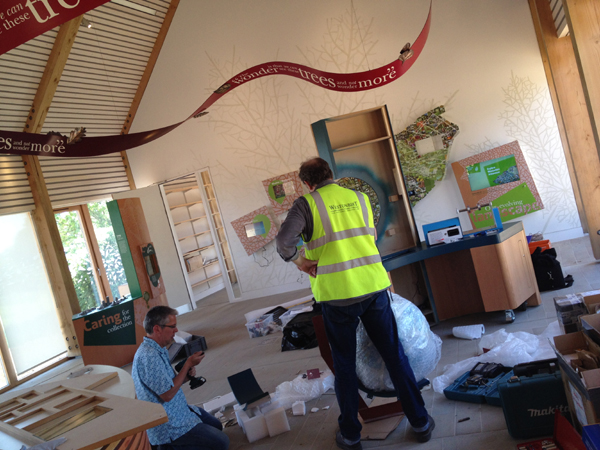
This month we’ve been installing interactive exhibits for the Forestry Commission at their new visitor centre at The National Arboretum in Gloucestershire.

Westonbirt Arboretum exhibit 1

Westonbirt Arboretum exhibit 2

We produced three interactives for Outside Studios as part of an exhibition in the new space at the Forestry Commission’s Westonbirt Arboretum.  The Christopher Mitchell Information Centre will help visitors understand the arboretum’s fascinating history and the stories behind the trees and their continuous care and feature:

  • A touchscreen exhibit, as part of a dynamic wall map, drawing on a database of thousands of images and videos of the 600 acre site. Visitors will be able to navigate the tree collection through the images and delve deep into 160 years of the arboretum’s history and landscape.
  • An interactive life cycle of the tree.
  • A means of asking questions of viewers to elicit their views on conservation “hot topics” which will track responses and attitudes over time.

Westonbirt Arboretum exhibits

Opened recently by the Duchess of Cornwall, Patron of the Friends of Westonbirt Arboretum, the project has been funded by the Friends of Westonbirt Arboretum, the Forestry Commission, a £1.9m grant from the Heritage Lottery Fund, and a £500,000 Biffa Award as well as gifts from a number of foundations, trusts and generous individuals.

The University of Huddersfield – a sneak preview of our multimedia work for their Archives and Special Collections

How do you present archive collections of materials on subjects as different as Rugby League and the British Music Collection? That was the challenge we took on as part of a Heritage Lottery Fund supported project at the University of Huddersfield’s Archives and Special Collections.

A new archive centre will make the heritage collections more accessible to everyone, free of charge and will include what we describe as a Gesture Wall in the centre’s experience zone.

Huddersfield University Archives Gesture Wall

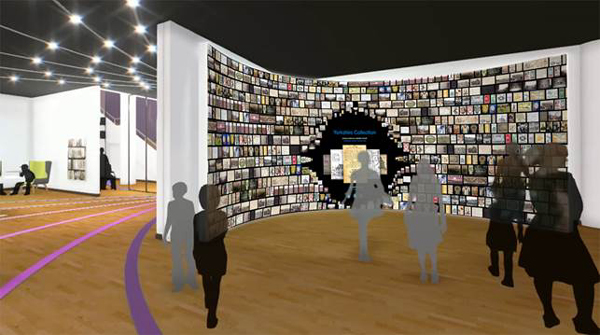
A river of images from the archive database will flow across a wall around 10m in length and 3.5m high. Visitors can gesture towards a particular image to expand and enlarge it or to play a video. An inventive way to display a varied collection of images, allowing individuals to focus on their favourite topics of interest.

Here’s a sneak preview of the prototype…

Heritage Lottery Fund

Supported by the National Lottery through the Heritage Lottery Fund.

Princess Royal opens Sumburgh Head Lighthouse

The newly refurbished Sumburgh Head Lighthouse buildings were opened on 3 June 2014 in an official opening ceremony led by HRH Princess Royal.  As patron of the Northern Lighthouse Board, Her Royal Highness has visited Sumburgh Head Lighthouse many times and this visit saw her given a tour of the new facilities, the refurbished Engine Room, Foghorn and Radar Hut.

Hundreds of invited guests attended including representatives of supporters and funders, the RSPB, the Northern Lighthouse Board, Scottish Rural Development Programme, European Regional Development Fund, Heritage Lottery Fund, Historic Scotland, Highlands and Islands Enterprise, Scottish Natural Heritage, The Wolfson Foundation, Shetland Islands Council, and the Shetland Amenity Trust.

Food web interactive exhibit

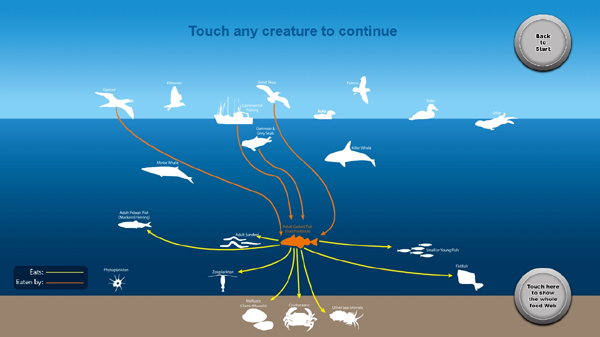
We were delighted to be involved in this project which has become a highlight of tourism on mainland Shetland. We developed two touch-screen interactives and several audiovisual exhibits to tell the story of the area’s outstanding wildlife. We hear HRH Princes Royal gave everyone quite a fright with the interactive fog horn!

Read our case study for Sumburgh Head Lighthouse and Marine Life Centre.

Hengistbury Head Visitor Centre officially open

Hengistbury Head was officially opened on 12th April 2014 by naturalist, nature photographer, author and presenter of BBC2’s Springwatch, Chris Packham.

With the Mayor of Bournemouth, Councillor Rod Cooper, and representatives of supporters, the Heritage Lottery and Canford Environmental, Chris Packham unveiled a plaque at the resource and learning centre.

Chris Packham enthused, “What we need are centres like this to provide resources to excite young people. We have got a fantastic resource in the UK but we have got to make sure people develop a deep-rooted affinity for it.”

Hengistbury Head Battle for Survival

Wide Sky Design created two interactive exhibits for the Visitor Centre, a big screen exhibit illustrating the geology of the site and a touchscreen display exploring Hengistbury Head’s “Battle for Survival” against the natural elements and human development on the site.

The right package for each client

Much of the work to be won in our sector is put out to tender and winning that work depends on getting the balance of our whole offering just right.

With public money so often at stake, a price that reflects excellent value for money is essential as, of course, is the demonstrable ability to fulfill the contract requirements.

Experience counts for a great deal too. Not just the body of work but how each project is dealt with right from the start. One thing that our clients report back to us as being particularly valuable is our structured development process. It allows us to manage time and cost (supporting the client requirements for clear pricing and meeting their deadlines). It also enables us to communicate project progress and manage any design changes, a regularly recurring theme in our industry.

In any project you need to manage time, cost and quality. Getting the development process right is what makes the right package work.

Welcoming Rob to the team

This month we were joined by a new addition to the team. Rob Presland has come on board as senior developer, boosting our programming capacity and bringing new skills and experience on board too. Expect to see more online and app projects in our portfolio.

With a strong project management background Rob will fit in nicely with our structured development ethos. He also brings with him extensive experience in e-learning and technology for education, for example, in developing online assessments and resources.

Rob Presland

Rob says, “I am interested in how the disciplines involved in e-learning can enhance the experience that users have of interactive exhibits. One of the key things about online learning is to keep people interested and engaged throughout the whole experience, enhancing the quality of their interaction. I’m looking forward to bringing this experience into a new field and, hopefully, opening up new possibilities and choices for Wide Sky Design’s clients.”

Military Intelligence Museum – a sneak preview

We are excited to be starting work on an exhibit for the Military Intelligence Museum in Bedfordshire telling the story of the Intelligence Corps in WWI.

Military Intelligence Museum strategic plan

We have been working with them on a strategic plan to develop the museum and this will be the first of the exhibits that come to life, providing a combination of exhibit display and digital interpretation.

WW1 exhibit design

As well as housing a multi-touch screen, the space will allow curatorial staff to develop the interpretation depending on annual themes during the period from 2014 to 2022 and will be able to display anything from small objects such as a pencil fuse through to uniforms and regalia. 

The interactive software will provide a framework within which a database of archive records can be accessed. This database can be built up over time, providing flexibility to modify existing records as well as adding new content.


Digital Fireplaces

How do you tell a story, evoke an atmosphere and capture the spirit of a place whilst making the best use of space in a sensitive historic building?

If the room has an imposing fireplace that is otherwise unused, this can be the ideal spot to create that impact without intruding on the integrity of the rest of the space.

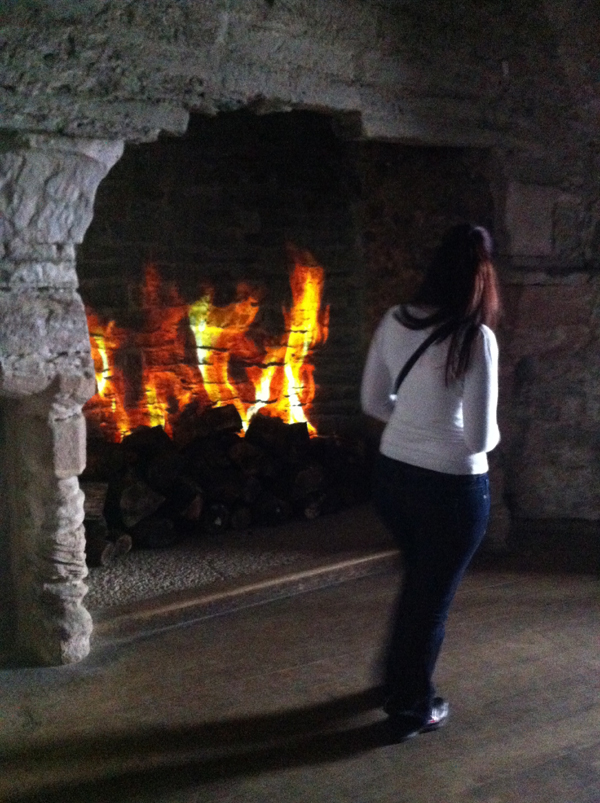
We have created digital fireplaces at Caerphilly and Conwy Castles – although there is no reason why this technique couldn’t be used in palaces, stately homes and other historic buildings too.

Interactive fire place exhibit at Conwy Castle

At Caerphilly, the digital fire adds a sense of warmth to the Great Hall, also using music and images to convey the sense of celebration that the hall would often see, and telling stories from the castle’s history.

The digital fireplace system can be installed easily – all that is needed is a power socket and a chimney. Our bespoke expansion mount system is designed to be installed in listed buildings with no permanent fixing required which means that this imaginative way of interpreting the spirit of place is an opportunity for any historic building.

Page 9 of 11« First...7891011